
Signs that need checking
Grey squirrels are active by day and are often most noticeable before sunrise, especially in winter. Look for scratching or rustling in the loft or wall cavity, chewed openings, disturbed insulation, droppings, urine odour and damage around roof vents or eaves. A squirrel seen in the garden does not prove that one is in the building.
Rats, birds and other animals can also make noise in a roof void. Droppings are not always easy to identify, so avoid sealing the only suspected entry point until the inspection has considered whether an animal is still inside and whether young may be present.
Why autumn and winter can expose the problem
Squirrels use roof spaces for shelter and may become more obvious as colder weather changes their search for food and nesting places. In winter, bare trees can also make dreys easier to spot. Repeated daylight noise, a new draught around the loft or a sudden rise in scratching is a reason to arrange an assessment rather than rely on a sound recording or a guessed species.
Before a visit, keep people and pets away from the loft, do not handle droppings or an animal, and note when the noise occurs. If there is a water tank, exposed wiring or food-storage area nearby, mention it when arranging the inspection.
Lawful control and the species check
Grey squirrels are an invasive species, and a grey squirrel caught alive must not be released elsewhere. Control methods must be permitted for the species, used humanely and carried out by someone competent. A live-capture trap is not a relocation solution. DIY poisoning or an unapproved trap can injure non-target wildlife and create a legal problem.
Do not proof or disturb a suspected red squirrel, active bird nest or bat roost without appropriate advice. Red squirrels and their dreys are protected, and bats and their roosts are protected even when the roost is inside a building. Where identification is uncertain, the inspection should pause the work and direct the matter to the relevant wildlife specialist or licensing route.
What a professional plan should cover
A suitable plan starts with access points, activity evidence and the condition of the roof or loft. Depending on the findings, it may involve lawful control, removal of the immediate route into the building, and proofing with durable mesh or metalwork. Proofing should not be treated as a substitute for checking that the void is clear first.
The inspection should also consider overhanging branches, dense ivy, damaged vents, gaps at eaves and materials stacked against the building. Once access has been dealt with, keep roof edges and vents maintained, secure food and refuse, and avoid putting bird feed directly beside the roofline.
Homes, landlords and food premises
Tenants should report roof or loft access to the landlord or managing agent before arranging structural work. Owners and agents should confirm who can provide access to lofts, communal roof spaces and neighbouring boundaries. The scope, follow-up visits and any repair or proofing work depend on the individual property and should be confirmed by phone.
In a shop, café or other food business, squirrel activity can affect the condition of the premises and the protection of food from contamination. Isolate exposed food, keep waste secure and record the issue for the food-safety system. Wigan Council’s listed pest-control service does not deal with squirrels, so a specialist private assessment may be needed.
Questions about squirrel control
What people ask before booking
Are squirrels in a Wigan loft active during the day?
Yes. Grey squirrels are daytime animals and can be particularly noticeable before sunrise. Daylight scratching or scuttling supports the possibility, but it does not identify the animal by itself; rats and birds can also occupy roof spaces.
Can a trapped grey squirrel be released somewhere else?
No. GOV.UK says it is an offence to keep or release some wild animals, including grey squirrels. A live-caught grey squirrel must be dealt with humanely and lawfully, so live capture should not be treated as relocation.
Should I seal the hole as soon as I find it?
Not before checking what is using the opening. Sealing too early can trap an animal inside, separate young or disturb a protected bat roost. Arrange an inspection first, especially where the species is uncertain or there are signs of nesting.
Related help for your property
Further reading: identification, safety and local guidance
- BPCA: Pest advice for controlling Grey Squirrels (opens in a new tab)
- GOV.UK: Pest control on your property (opens in a new tab)
- Wigan Council: Pest Control Service (opens in a new tab)
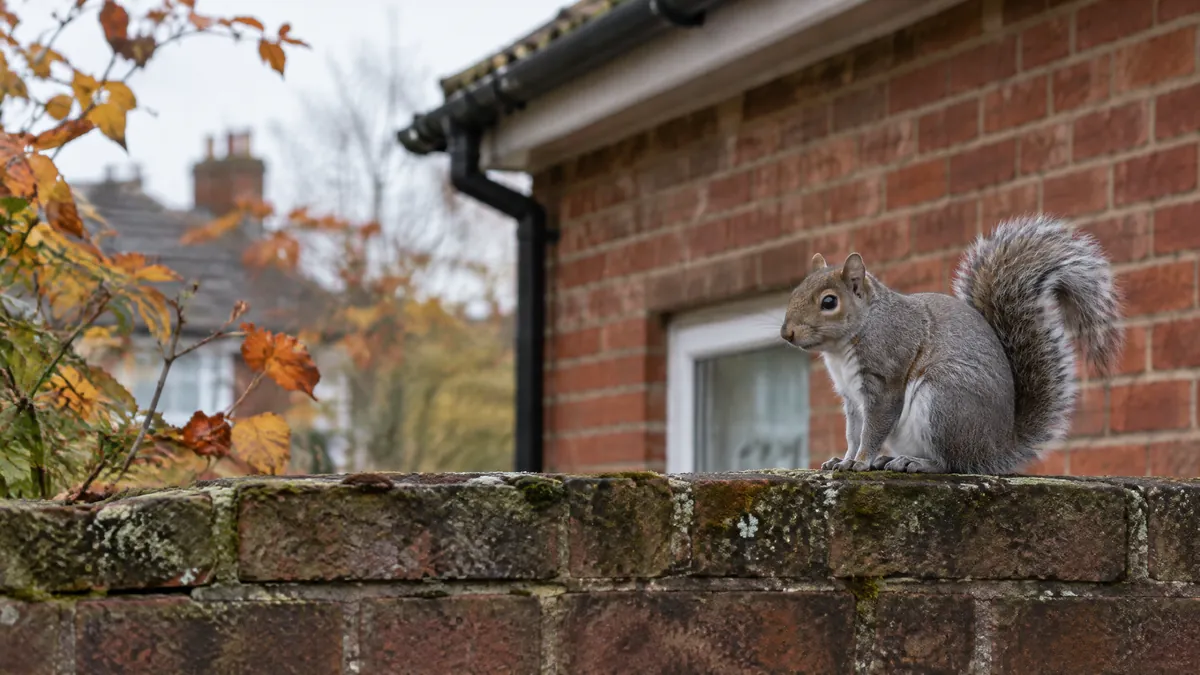
Pest images are illustrative, not photographs of a customer's property.