
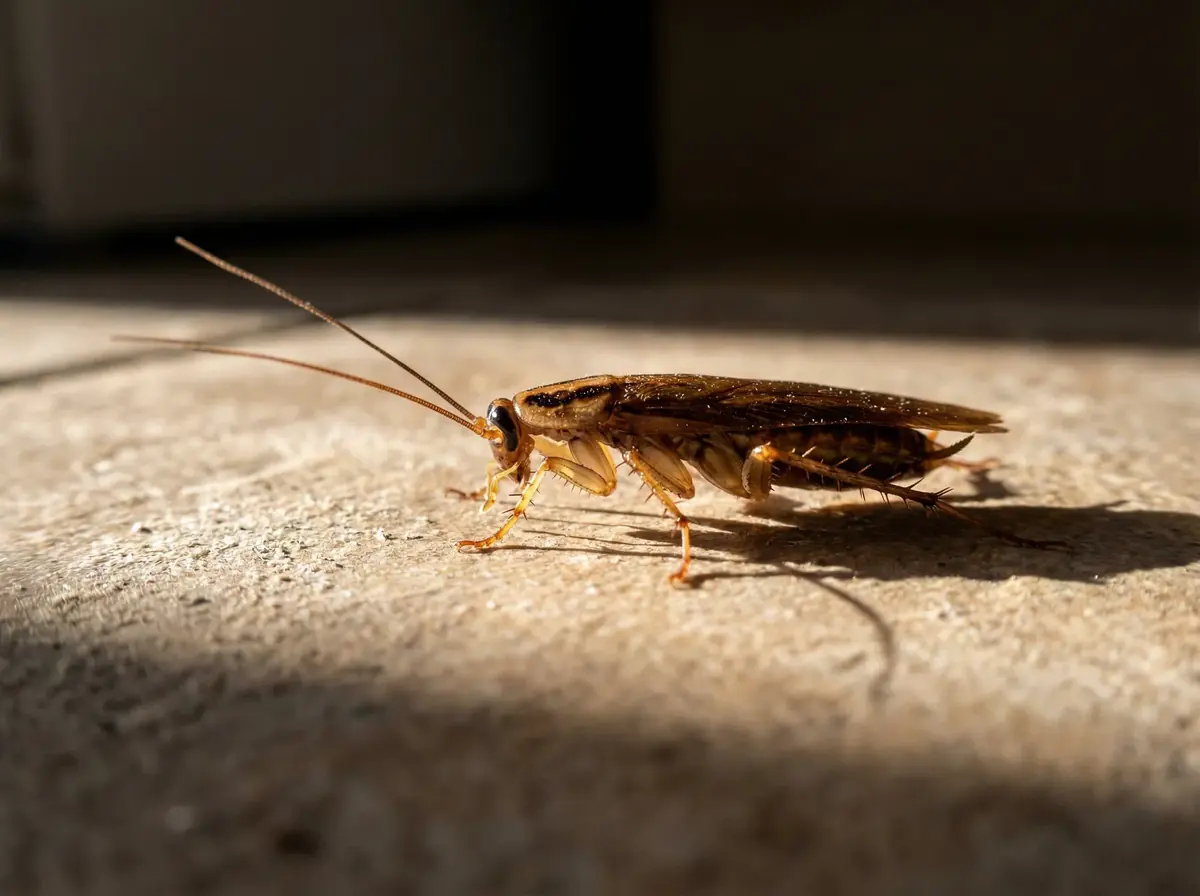
What cockroach signs can mean
Seeing one insect does not identify the species or show how far activity extends. German cockroaches and oriental cockroaches differ in appearance, harbourage and behaviour, while other insects can be mistaken for them. A clear photograph, the room where it was found and the time of day can help, but inspection is the reliable way to confirm the problem.
Look for live or dead insects, pepper-like droppings, cast skins, egg cases and a stale odour in undisturbed areas. Night-time activity around a fridge, cooker, dishwasher or boiler is useful information. Do not move appliances or open electrical housings yourself; note the locations and make them accessible for inspection.
Inspection before treatment
A useful inspection follows the signs into the building. It should consider appliance voids, cupboards, cracks, plumbing routes, wall-floor junctions, refuse areas and adjoining rooms or units. In flats, rented properties and commercial premises, access to shared areas may matter, so tell the owner, agent or facilities contact early.
The treatment plan should follow the confirmed species, evidence and site conditions. It may include monitoring points, targeted gel baiting or another appropriately selected professional treatment, together with hygiene and proofing advice. Follow-up checks can be needed because hidden harbourages and egg cases are not resolved by simply treating the place where an insect was seen.
Food businesses should act promptly
For restaurants, takeaways, bakeries, shops, warehouses and other food premises, cockroach evidence is a food-safety issue as well as an operational problem. The Food Standards Agency lists cockroaches among pests encountered in food businesses and says food waste and rubbish should be removed promptly. Record the sighting, protect exposed food, follow your food-safety procedure for affected stock, and contact a competent pest professional without delay.
Keep the inspection practical: provide access to kitchens, stores, plant areas, delivery routes, staff areas and waste storage. Share cleaning schedules, recent deliveries, contractor reports and any pest-sighting log. Treatment must fit the business's food-safety controls; do not apply household aerosols around food, preparation surfaces or equipment.
Prepare for a cockroach visit
Before the visit, clean up food residue, seal food and animal feed, empty indoor bins and reduce clutter without disturbing suspected harbourages. Note when and where activity appears, and retain a photo or specimen if it can be collected safely. Do not spray over monitoring points or gel bait.
After treatment, prevention is site-specific. Repair leaks, keep food and waste contained, improve cleaning around appliances and close suitable gaps once identified. In rented or shared buildings, agree responsibility for access, repairs and linked units.
Questions about cockroach control
What people ask before booking
Are cockroaches only found in dirty kitchens?
No. Food residue and accessible waste can support activity, but cockroaches can also arrive in packaging or move through shared service routes. Clean premises can still need species identification, monitoring and treatment.
Will one gel treatment always solve cockroaches?
No responsible plan should promise that. The result depends on the species, harbourages, access, egg cases, building conditions and whether linked areas are addressed. Inspection and follow-up monitoring determine what is needed.
What should a Wigan food business do after seeing a cockroach?
Record the location and time, protect exposed food, follow your food-safety procedure for affected stock, avoid household insecticide sprays and arrange a prompt professional assessment. Keep access available to kitchens, stores, plant and waste areas.
Related help for your property
Further reading: identification, safety and local guidance
- BPCA: Cockroach control (opens in a new tab)
- Food Standards Agency: Getting ready to start your food business (opens in a new tab)
- Wigan Council: Pest control for businesses (opens in a new tab)
Pest images are illustrative, not photographs of a customer's property.