
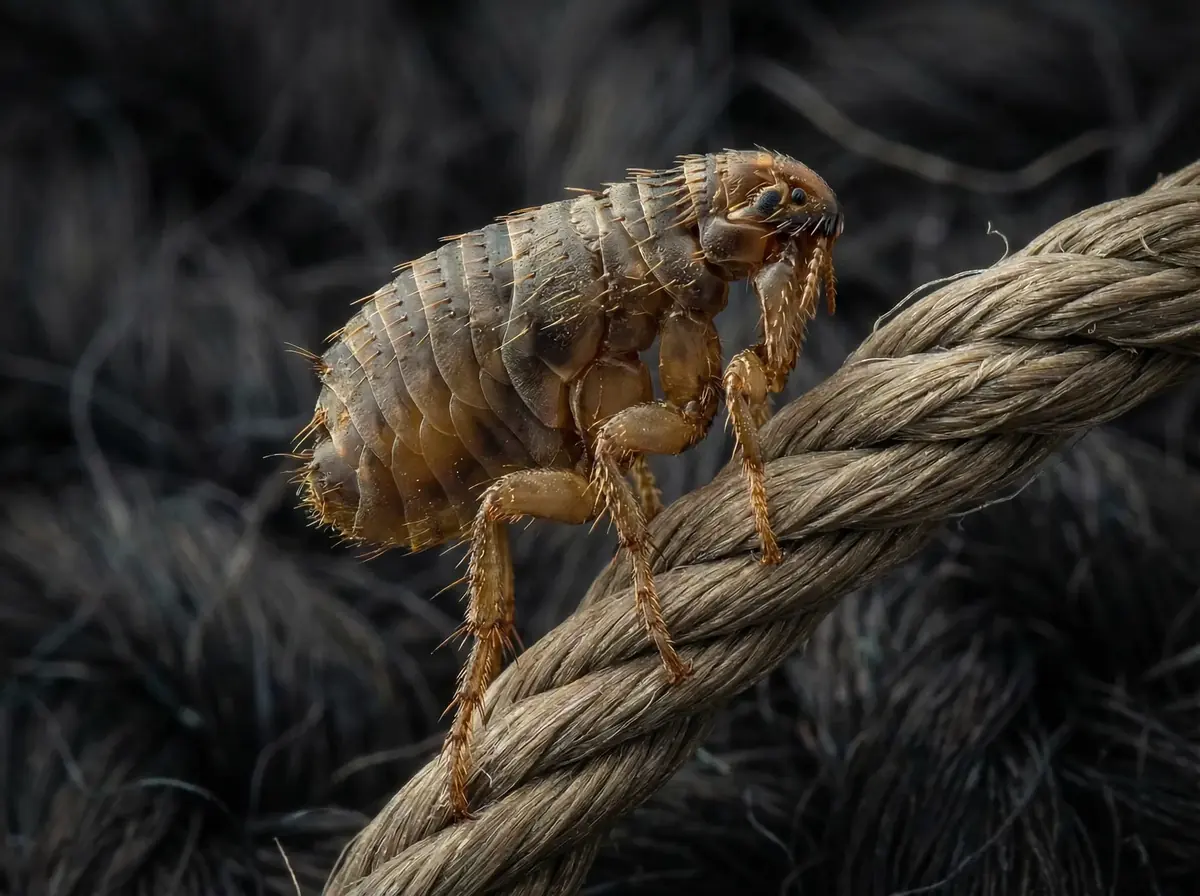
Is it fleas, and where are they coming from?
Small itchy bites around the ankles or lower legs, flea dirt in pet bedding, or fleas jumping from carpet can point towards an infestation. Bites alone do not prove the cause, so an inspection should consider pets, soft furnishings, floor coverings and areas where animals rest. Fleas can develop through egg, larval and pupal stages, with adults emerging when they detect movement, heat or a host.
That lifecycle explains why a few live fleas after treatment do not automatically mean the work has failed. Eggs and pupae are harder to affect than adult fleas, and newly emerged adults may appear as the treatment takes effect. If signs continue, record where and when you see them rather than repeatedly applying unplanned products.
Pet treatment and home treatment are different jobs
Arrange flea treatment for cats, dogs and other animals with your vet or another suitably qualified animal-care professional. Use only a product approved for that animal and follow its instructions. Never put an insecticide intended for floors or furnishings on a pet's fur or skin, and ask the vet about treating every relevant animal in the household.
An environmental treatment targets the places where flea stages collect: carpets, cracks, floor edges, pet resting areas and upholstered items where appropriate. The exact method depends on the inspection and the property. A residual insecticide, sometimes combined with an insect growth regulator, may be considered; it is not a blanket child- or pet-safe treatment, so occupants must follow the written precautions.
Prepare properly before a visit
Clear floor space and vacuum carpets, edges and areas under furniture as far as access allows. Empty the vacuum or remove its bag into an outside bin. Wash pet bedding, removable covers and affected washable fabrics at the hottest suitable setting, and reduce clutter so the technician can reach likely harbourage areas.
Remove people and animals before treatment, cover or remove exposed food, and protect fish tanks as instructed. Tell the technician about children, pets, allergies, aquariums, access restrictions and rooms that cannot be treated. If you rent, check whether the landlord or managing agent needs to approve access or arrange treatment.
Re-entry, follow-up and prevention
Do not re-enter treated areas until the stated interval has passed and they have been ventilated as directed. The time depends on the product and label; BPCA gives a minimum of three hours for some treatments, so use the technician's written instructions rather than a general rule. Keep children and pets away until the area is confirmed suitable for re-entry.
After a residual treatment, do not wash or vacuum treated carpets until the advised period has elapsed. BPCA notes this may be at least two weeks because emerging adults can contact the remaining insecticide. Continue the pet's veterinary flea programme, wash bedding regularly and vacuum later as advised. A further visit may be needed if the lifecycle or access conditions require it; any follow-up should be agreed for the individual property.
Questions about flea treatment
What people ask before booking
Why am I still seeing fleas after treating my pet?
Adult fleas may still emerge from eggs or pupae in carpets, bedding and other resting areas. Treat the animal through a vet and address the home environment as a separate part of the plan.
How long should we stay out after flea treatment?
Use the written instructions for the product and property. Some treatments require at least three hours away followed by ventilation, but the stated re-entry time takes priority. Keep pets and children out until the area is confirmed suitable.
Can I vacuum after the treatment?
Not immediately if a residual treatment has been applied. Follow the technician's instructions; BPCA advises that treated carpets may need to remain undisturbed for a minimum of two weeks so emerging fleas contact the residual treatment.
Related help for your property
Further reading: identification, safety and local guidance
- BPCA: Pest advice for controlling fleas (opens in a new tab)
- Wigan Council: Pests (opens in a new tab)
- NHS: Insect bites and stings (opens in a new tab)
Pest images are illustrative, not photographs of a customer's property.