
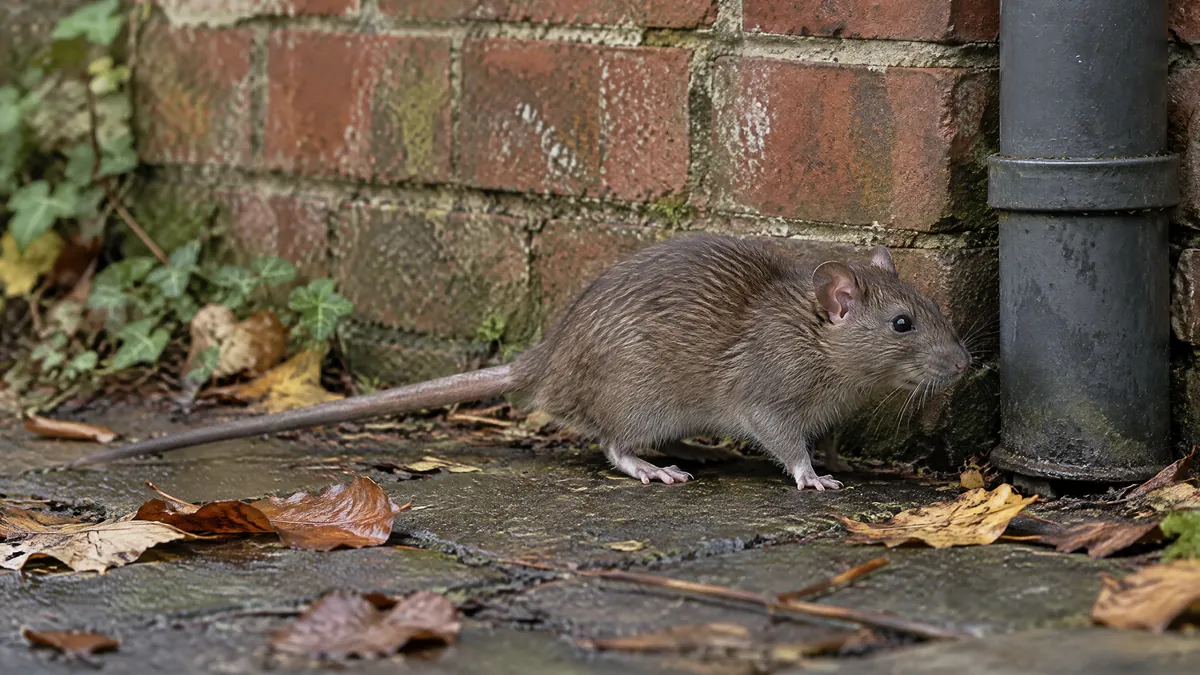
What the signs can tell you
Rats commonly leave dark, pellet-shaped droppings, gnaw marks, greasy rub marks and disturbed food or refuse. Mice leave smaller droppings and may be heard in cupboards, partitions or loft insulation. Scratching, rustling and scuttling in a loft can also be a squirrel, so sound alone is not reliable.
Grey squirrels are more likely around roofs, trees and high-level access points. Look for damaged insulation, gnawing, holes near vents or roof edges, and a strong smell or droppings in the loft. Photos and notes about activity can help, but overlapping evidence may need a visit.
A winter entry-point survey
A useful inspection follows the route from outside to the harbourage or food source. It should include gaps around pipes, doors, windows, vents and foundations; damaged drain covers or disused pipework; roof edges and loft vents; and vegetation touching the building. Low-level access matters for rats and mice, while squirrels can use trees, fences and roofs.
Before an appointment, seal food, close bin lids, remove spilled bird seed and avoid moving suspected nesting material. Do not seal a hole if an animal may still be inside. Tenants should report structural defects to the landlord or managing agent, because proofing may need the owner’s consent.
Prevention and professional control
Depending on the findings, a plan may combine removal of accessible food and nesting materials, repairs or proofing, monitoring and an appropriate control method. Rodenticide, traps and exclusion work must account for children, pets, non-target wildlife and the building’s use; there is no blanket child- or pet-safe pesticide claim.
Grey squirrel work needs particular care. Grey squirrels must not be released elsewhere after live capture, and active nests or protected wildlife need lawful specialist handling. An assessment should establish what is present, what access can be closed safely and whether repairs or follow-ups are needed.
What to do about contamination
Avoid sweeping or vacuuming dry droppings. Keep people and pets away from heavily contaminated areas and ask for cleaning guidance before disturbing material. Rodent urine, faeces and saliva can carry infection; hantavirus is rare in the UK, but the NHS advises medical advice if illness follows contact with rats, mice or voles.
In a food business, isolate any potentially contaminated food and follow the site’s food-safety procedure. Wigan Council’s own service is for council housing tenants and businesses should use the relevant commercial arrangements; private homeowners, landlords and tenants should confirm their own pest-control route rather than assume council treatment is available.
Questions about rodent control
What people ask before booking
Is the noise in my loft a rat or a squirrel?
It could be either. Scratching and scuttling are not enough to identify the species. Roof access, gnawing, droppings, insulation damage and the timing of activity should be considered together during an inspection.
Should I block the hole straight away?
Not if an animal may still be inside, because sealing the opening can trap it or separate young from a parent. Record the location and arrange an assessment, then complete proofing once the route is clear and the repair is suitable.
Does Wigan Council treat rodents at private homes?
Wigan Council states that it no longer offers pest-control services to private tenants, landlords or homeowners. Its published resident service is for council housing tenants, while businesses have separate guidance, so check your eligibility directly with the council.
Related help for your property
Further reading: identification, safety and local guidance
- BPCA: Pest advice for controlling Rats (opens in a new tab)
- BPCA: Pest advice for controlling Grey Squirrels (opens in a new tab)
- Wigan Council: Pests (opens in a new tab)
Pest images are illustrative, not photographs of a customer's property.