
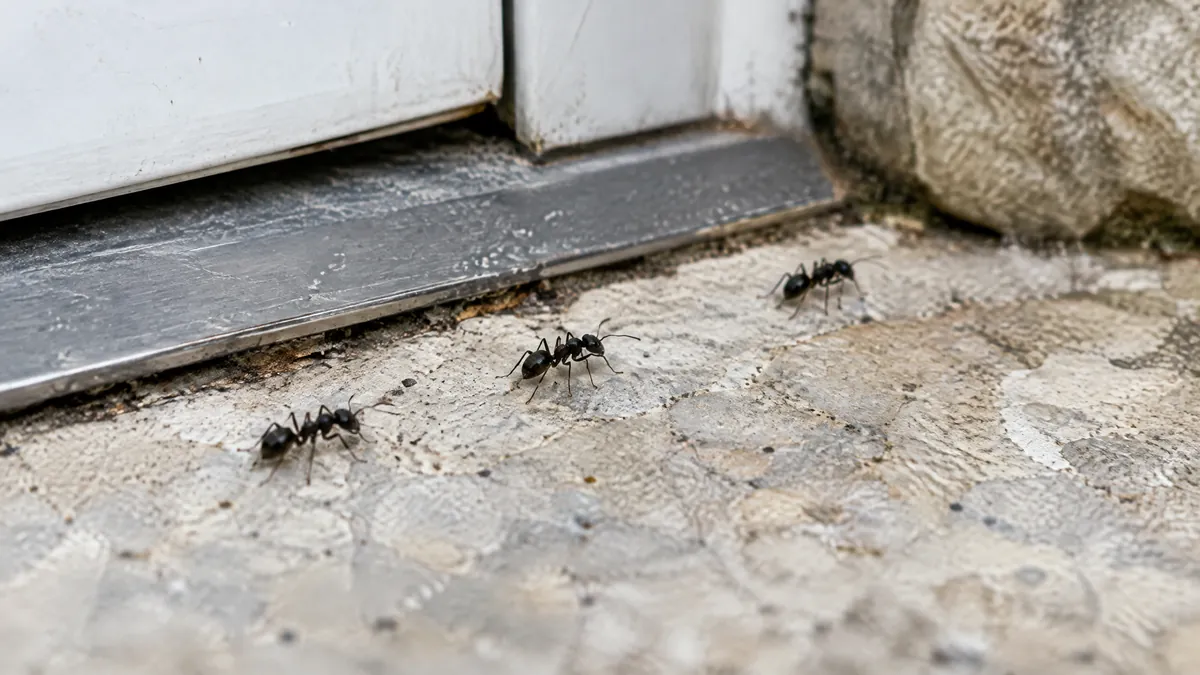
Garden foragers or an indoor colony?
Watch where ants go rather than judging the problem by numbers. A line between a skirting-board gap, window frame or pipe entry and food is a trail. Small soil piles outside, or ants moving between paving, a wall and the building, point towards an outdoor nest. Heated buildings can support less familiar indoor species with several inaccessible nests, so identification matters before choosing a product.
Winter does not make every ant problem impossible. Outdoor activity normally reduces in cold weather, but a heated room, food residue or a colony within the structure can sustain sightings. If activity continues in autumn or winter, record the room, time, entry point and whether ants are dark, pale or unusually small. A photograph can help, but treatment should follow an inspection.
- Clean spills and crumbs promptly, seal sweet foods, and empty food waste regularly.
- Do not seal the visible gap before tracing the route; it may simply divert the trail elsewhere.
- If you rent, report recurring activity to the landlord or managing agent and agree access before treatment.
Bait or repellent spray?
A repellent spray may kill visible ants but leave the nest active and disrupt the trail. For suitable foraging ants, a professional may use approved bait so workers carry it back to the nest. This needs careful placement, patience and review; it is not a reason to scatter insecticide around food areas.
Bait is not right for every ant. Pharaoh ants and other small indoor species can have multiple nests, and poor treatment can spread activity through a building. The plan should consider species, nest location, children and pets, food areas, voids and adjoining rooms. Follow the product label and controller's instructions.
What to prepare before a visit
Note when trails appear, what attracts them, where they disappear, and whether activity is indoors, outdoors or both. Photograph the trail and nest entrance without disturbing it. Clear worktops and floor edges, but do not use strong repellent products beforehand because they can obscure the route and affect bait acceptance.
For a café, takeaway, shop or other food business, ant activity belongs in wider food-safety controls. Keep ingredients covered, remove waste promptly and maintain clean, repairable surfaces. The Food Standards Agency identifies ants among insects encountered in food businesses and expects pest control in food-safety procedures.
Ant control in Wigan
Treatment scope, preparation, follow-up and quotation depend on the property and suspected species, so confirm these by phone before an appointment. Wigan Council lists ants among pests treated for council housing tenants, while its resident guidance says it no longer provides pest control for private tenants, landlords or homeowners. That position is separate from arranging an inspection for a private property.
A useful treatment plan should address the active trail, likely nest or entry route, food and moisture sources, and practical proofing after control. If ants return, the timing and location may indicate an untreated nest, a second route, or conditions that continue to attract foragers.
Questions about ant control
What people ask before booking
Will spraying the ants get rid of the nest?
Not necessarily. A repellent spray may kill visible workers while leaving the colony active and can break up the trail. Where the species and site are suitable, bait may allow workers to carry treatment back to the nest. An inspection should determine the appropriate approach.
Why are ants still appearing indoors in winter?
Cold weather can reduce outdoor activity, but heated rooms, food residues and colonies inside wall or floor voids can sustain indoor sightings. Persistent trails in autumn or winter deserve identification and an inspection rather than being dismissed as a seasonal nuisance.
What should I do before ant treatment?
Remove accessible food and crumbs, secure waste, note the trail and entry point, and clear the edges of rooms for inspection. Avoid applying strong repellent products immediately beforehand, and tell the controller about children, pets, food preparation and any tenancy or access restrictions.
Related help for your property
Further reading: identification, safety and local guidance
- BPCA: Pest Advice for controlling Ants (opens in a new tab)
- Wigan Council: Pests (opens in a new tab)
- Food Standards Agency: Starting a food business (opens in a new tab)
Pest images are illustrative, not photographs of a customer's property.