
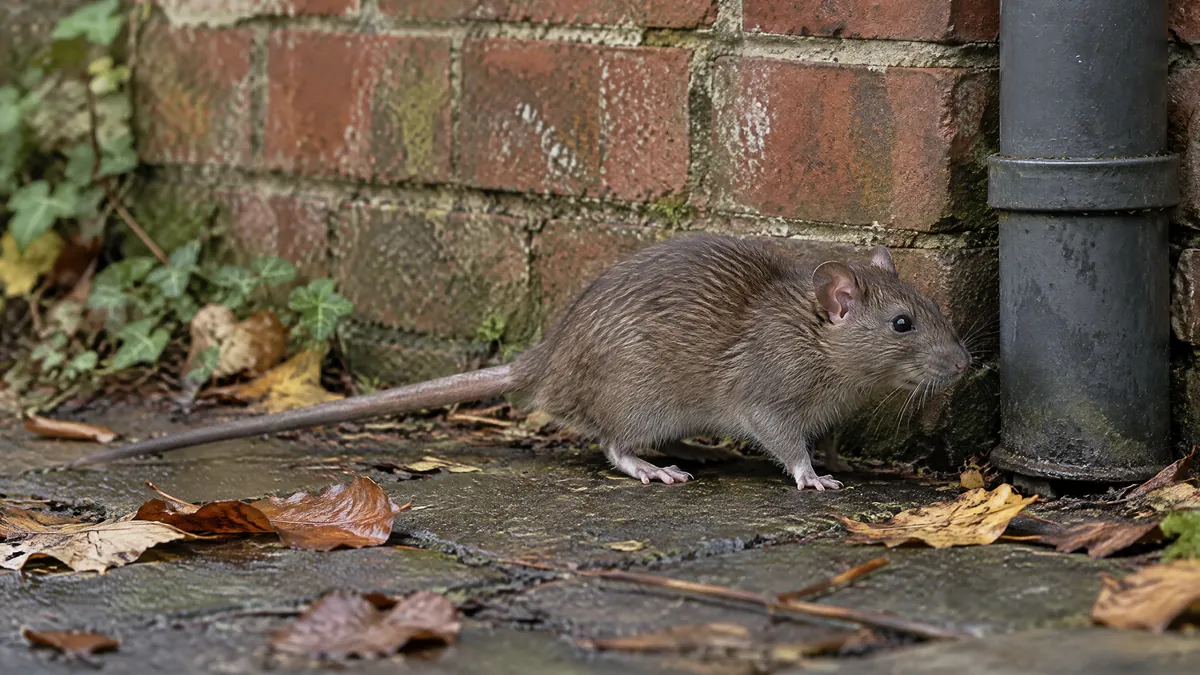
What rat signs can mean
Look for dark, pellet-shaped droppings, gnawing on packaging or cables, greasy marks along walls, and holes beside sheds or solid structures. Scratching or scuttling can indicate a rodent, but sound alone is not reliable: BPCA notes that squirrels can make similar noises.
A rat is usually sturdier and has a blunter muzzle than a mouse, with larger droppings and damage. A large mouse can still be mistaken for a young rat, so photographs, droppings, entry gaps and travel routes are more useful than a quick visual label. Avoid handling droppings or disturbing a nest.
Gardens, drains and floor voids
As autumn and winter progress, rats may seek warmer shelter indoors. Gardens can provide cover beneath sheds, compost, timber, dense growth and debris. Bird seed, unsecured bins, food waste and pet food can keep activity going after the entry point is closed.
Rats also use sewer systems and may enter through damaged inspection covers, disused pipework or drainage defects. A floor void, wall cavity or roof space can hide the nest, so an inspection should consider the building, garden and accessible drainage rather than one room alone.
- Keep bin lids closed and remove food residue from containers.
- Store bird feed and pet food securely; clear spillages promptly.
- Reduce piles of timber, rubbish and overgrown cover near buildings.
- Do not seal a hole until you understand whether it is an active route or part of a drainage problem.
Finding the source and planning control
A sensible plan links evidence to access. Check low-level gaps around pipes, doors and outbuildings, food and refuse storage, drain covers, and where droppings or damage are concentrated. Treatment may involve control measures and proofing, but the approach depends on the property, occupants and route being used.
Before a visit, note when sounds or sightings occur, take photographs from a safe distance, and identify voids, sheds or drainage areas that may need access. Keep children and pets away from signs and do not apply pest products yourself. Treatment scope and follow-up are confirmed for the individual property by phone.
Wigan reporting and property access
Wigan Council says its online reporting service deals with issues on public land; private-land reports should generally be made only where there may be a public-health issue. This matters for rats around a private garden, rented property, business or shared drain.
If you rent, tell the landlord or agent when the entry involves the structure, communal area or shared drain. Keep records of sightings and access restrictions. For an inspection, call 01942 565 089 to discuss signs and next steps.
Questions about rat control
What people ask before booking
Is it definitely a rat if I hear scratching under the floor?
No. Rats, mice and squirrels can produce similar sounds. Droppings, gnawing, entry gaps and activity location help identify the cause, so an inspection is more dependable than sound alone.
What should I do about food and bird seed before rat control?
Close bin lids, remove food residue, store pet food securely and avoid excess bird seed on the ground. Do not disturb nests or use poison without professional advice.
What if a rat has bitten someone?
Wash the wound with soap and warm water, cover it and seek NHS advice if the bite is severe, infected, on a hand, foot, face or head, or you are concerned about tetanus.
Related help for your property
Further reading: identification, safety and local guidance
- BPCA: Pest advice for controlling rats (opens in a new tab)
- Wigan Council: Report it - Help (opens in a new tab)
- NHS: Animal and human bites (opens in a new tab)
Pest images are illustrative, not photographs of a customer's property.