
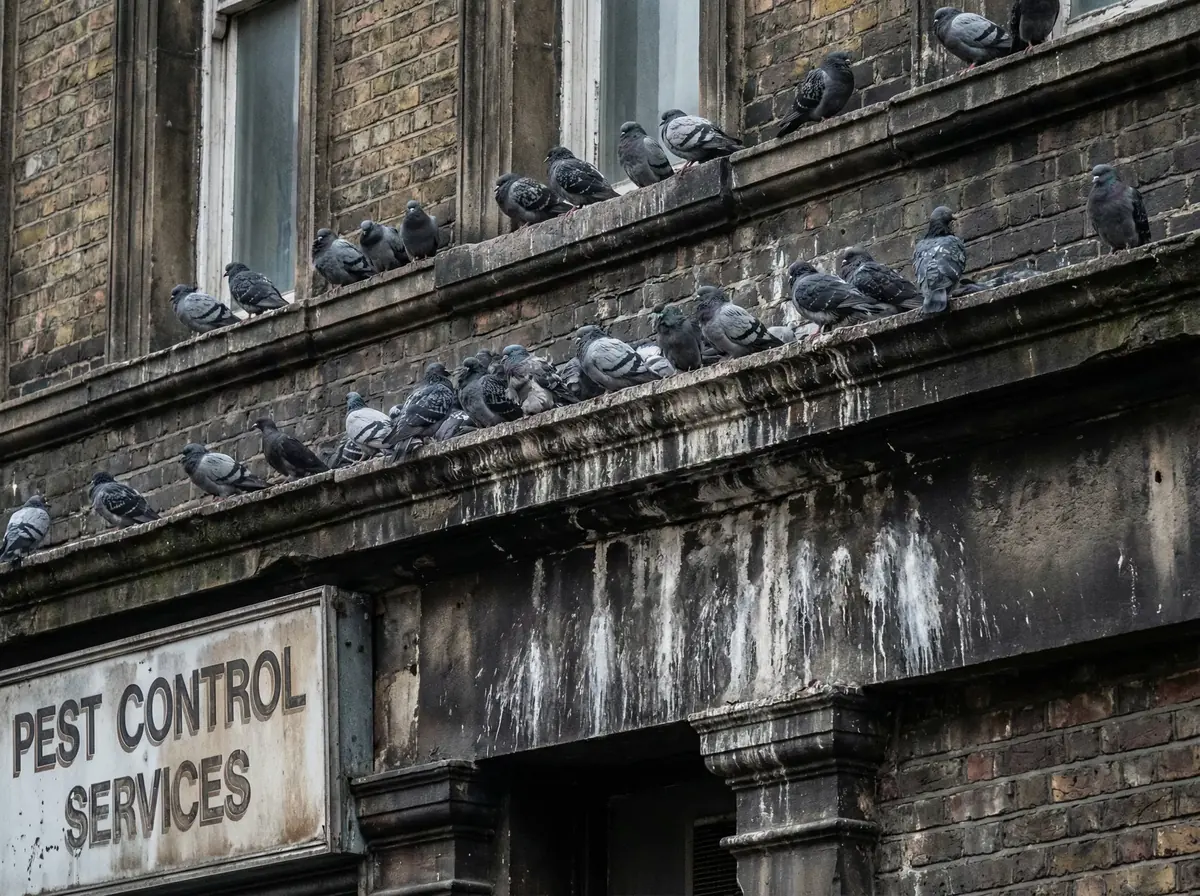
What a bird problem can look like
Signs include repeated birds settling on roof edges or window ledges, droppings, nesting material, feathers, noise from young birds, blocked gutters or birds entering a roof or cavity. Similar signs can have different causes, so a photograph or phone description may not identify the species. Access, height, roof condition and fouling location affect what can be done.
Avoid brushing or sweeping dry deposits. Keep people away from heavily fouled areas where practical and arrange suitable cleaning advice. At food premises, keep birds away from food, packaging and preparation areas, close bins and clear spillages. Anyone handling fouling should use appropriate protective equipment and wash their hands afterwards.
Survey, access and a proportionate plan
A useful survey considers where birds perch, roost or nest; how they enter; nearby food and water; building condition; safe working at height; non-target birds and future maintenance. If access is restricted, a landlord, managing agent, neighbour or business contact may need to approve entry or work.
Options may include physical proofing such as suitable netting, mesh, spikes, wires or guards, or dispersal where full exclusion is impractical. The building, bird pressure, access and environment determine the method. Proofing must be installed so birds cannot become trapped. Housekeeping and waste controls remain part of the solution.
Active nests and lawful bird control
All wild birds, their eggs and nests are protected by law. It is an offence to intentionally kill, injure or take a wild bird, or to intentionally damage or destroy a nest while it is being built or used. Work should avoid breeding activity where possible, with non-harmful deterrence considered first.
Do not remove an active nest, seal an occupied entry point or install netting over birds without assessment. Some activities may require a Natural England licence, and the species, purpose and method matter. If an active nest or protected species is suspected, pause work and obtain lawful advice.
Bird control in Wigan homes and businesses
Keep notes on when birds arrive, where they land or enter, droppings and any nest material. Do not feed birds near the affected area, keep refuse contained and avoid disturbing roof spaces before advice. Tell us about fragile roofs, restricted access, tenants, shared areas, food handling or a possible active nest. Scope, methods, follow-ups and any quotation are confirmed for the individual site.
If the issue is on public land or may present a public-health concern, Wigan Council says residents can use MyAccount. Private-property bird problems need the owner, landlord or managing agent to arrange inspection and access.
Questions about bird & pigeon control
What people ask before booking
Can you remove a pigeon nest?
Not automatically. Wild birds, eggs and nests are legally protected, and an active nest must not be intentionally damaged or destroyed. Timing, species and any licensing requirements determine what lawful action is possible.
Is bird netting always the best option?
No. Netting can help exclude birds, but the building, access, bird pressure, visual setting and risk to non-target birds must be considered. Spikes, mesh, wires, guards or dispersal may suit some locations better.
What should I do about pigeon droppings before a visit?
Keep people away where practical and avoid dry sweeping or brushing deposits. Do not handle contaminated material without suitable precautions. At food premises, isolate exposed food or packaging and maintain cleaning and handwashing controls.
Related help for your property
Further reading: identification, safety and local guidance
- Pest advice for controlling pigeons, gulls and other birds (opens in a new tab)
- Wild birds: protection and licences (opens in a new tab)
- Wigan Council: Report it - Help (opens in a new tab)
Pest images are illustrative, not photographs of a customer's property.