
Food businesses: act on evidence and risk
Rats, mice, cockroaches, flies, stored-product insects and birds create different risks in a kitchen, takeaway, shop or food store. Droppings, gnawing, damaged packaging, live insects, odour and repeated fly activity should be recorded and investigated. Identification can be uncertain from noise or a single mark in roof spaces, wall voids and ducts.
Food Standards Agency guidance requires protection against contamination and pests. Food waste and rubbish should be removed promptly so they do not attract pests. If food, packaging or preparation areas may have been affected, isolate and assess them through your food-safety procedure before deciding whether anything can be released, cleaned or discarded.
- Record what was found, where and when, and keep affected stock separate.
- Make stores, refuse areas, plant rooms and delivery routes accessible.
- Mention restricted areas, chemicals, pets or other site risks before the visit.
Monitoring records that help manage the site
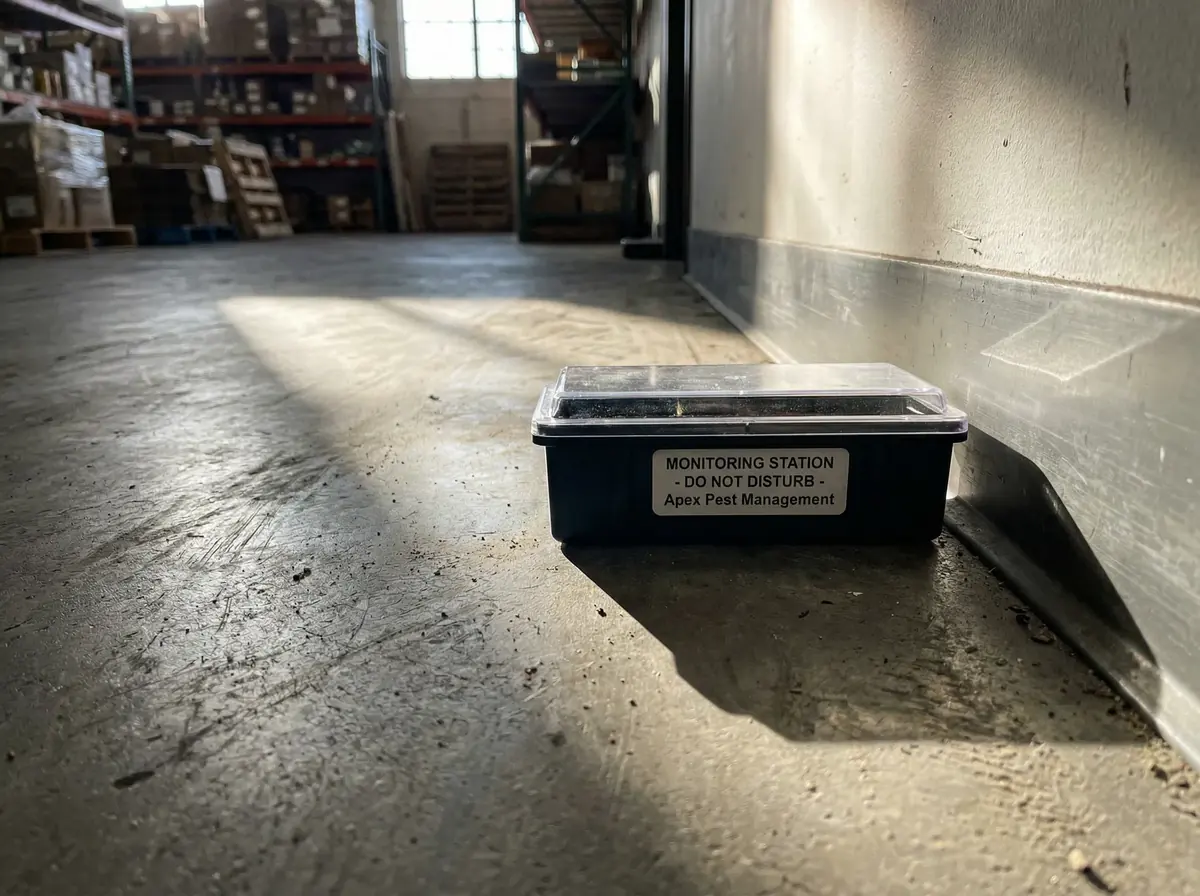
A useful commercial plan leaves a record, not just a treatment date. Depending on the premises, this may cover monitor locations, inspection results, pest evidence, corrective actions, proofing observations and next-visit recommendations. It shows whether activity is reducing or returning, and gives staff site tasks.
For food premises, the plan should sit alongside the business’s own food-safety and HACCP records. A contractor does not take over the proprietor’s responsibility, and a contract excluding relevant rooms or service areas may leave a gap. Frequency and equipment depend on risk and layout.
Proofing, landlords and storage premises
Inspection should consider door thresholds, vents, pipe and cable penetrations, roof edges, drains, wall voids, shelving, loading areas and refuse points. BPCA guidance highlights proofing, accessible stock and correct food-waste handling as practical prevention measures. Recommendations may concern an occupier, landlord, agent or another contractor, so agree who can authorise work before access.
Landlords and storage operators should clarify which rooms, neighbouring units, voids and external areas are included in scope. Shared bin stores and concealed service routes can affect the decision even when the first sign is inside one unit. Do not move suspect goods around the building until they have been assessed.
After the inspection
Findings should explain what is established, uncertain, urgent and suitable for monitoring. Options may include targeted control, non-chemical measures, proofing, hygiene or waste changes, and planned reviews. Where contamination is possible, follow the business’s food-safety procedure and seek environmental-health or specialist advice when needed.
For a Wigan enquiry, have the address, activity, affected areas, access restrictions, sightings and records ready. A phone discussion can establish whether the request concerns a food premises, landlord responsibility, storage stock or a shared building.
Questions about commercial pest control
What people ask before booking
Can you provide pest-control records for a food business?
Inspection and monitoring records can be agreed for the premises and its risk profile. They may include monitor locations, findings, actions and recommendations. They support due diligence but do not replace the business’s HACCP, cleaning, waste and contamination decisions.
What should a landlord do when a tenant reports rodents?
Record the location, dates and signs, then establish who controls the unit, shared areas, refuse space and building fabric. An inspection should consider neighbouring spaces and entry points, not only the first reported room.
Does commercial pest control guarantee compliance or a particular result?
No. Pest management can identify evidence and corrective actions, but outcomes depend on the premises, staff, building and responsible decisions. Scope and follow-ups are confirmed after assessing the site.
Related help for your property
Further reading: identification, safety and local guidance
- BPCA: Pest control procedures in the food industry (opens in a new tab)
- Food Standards Agency: Getting ready to start your food business (opens in a new tab)
- Wigan Council: Apply for it - business (opens in a new tab)
Pest images are illustrative, not photographs of a customer's property.