
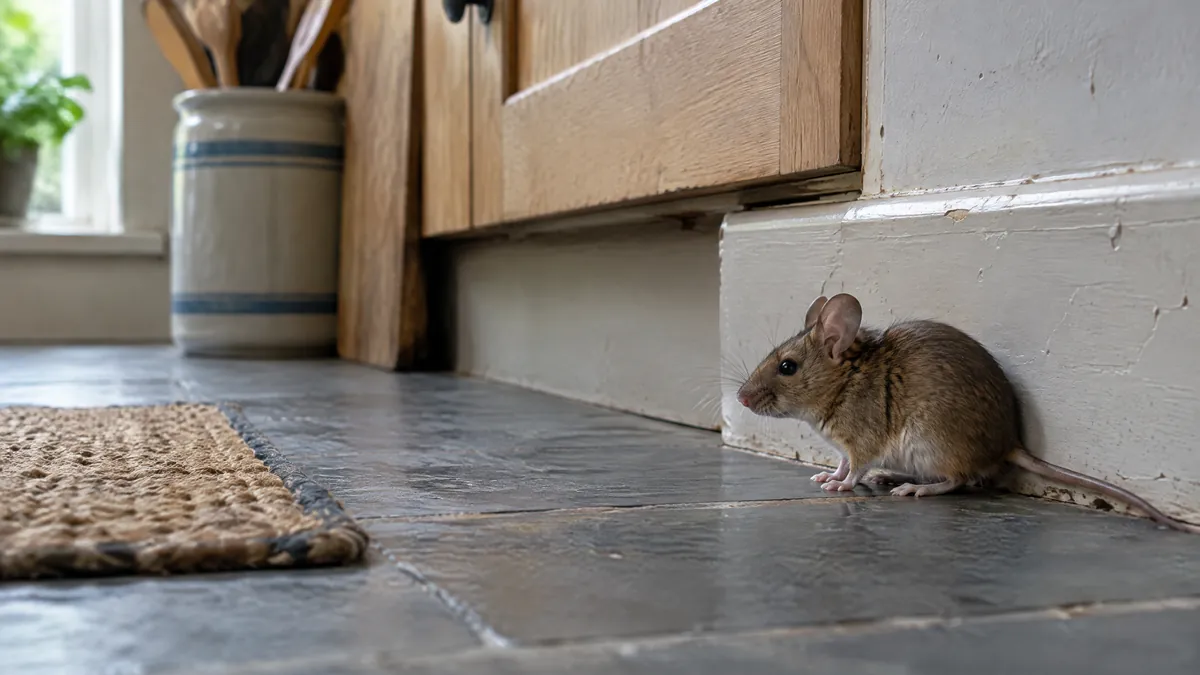
Why the first signs need checking
Droppings, gnawing, damaged food packaging, grease marks or scratching can indicate rodent activity, but sound alone does not identify the pest. A large mouse, young rat or squirrel can be confused, so an inspection should consider the evidence, likely routes and where activity is concentrated.
Rats often use consistent routes beside walls and may shelter in cavities, roof spaces, floor voids or drains. As colder autumn and winter weather reduces outdoor shelter and food, indoor sightings can become more likely. That is a reason to investigate promptly, not a basis for assuming the species or source.
- Note where and when signs appear, without disturbing droppings or contaminated material.
- Keep food, refuse and recycling closed and remove accessible food residue.
- Tell the technician about voids, drains, shared bins, adjoining rooms and any recent building work.
Rented and shared Atherton premises
In a rented property, report the problem to the landlord, managing agent or housing provider and ask who can authorise access to shared areas. Treatment may be incomplete if the suspected route is in a neighbouring flat, communal cupboard, service riser, loft, cellar, bin store or external drainage. Coordinate access rather than sealing or altering building fabric without permission.
Before a visit, clear access to likely entry points and keep a record of sightings. An inspection can then look at gaps around pipes, doors and windows, damaged drain covers, food or waste access, and harbourage around sheds or stored materials. Proofing and environmental changes may be recommended alongside targeted control; the appropriate combination depends on the inspection.
Food preparation and trading premises
The Food Standards Agency says food premises must allow good hygiene practices, including protection against contamination and pest control. This applies to the whole premises, not only the food-preparation room. For a café, takeaway, shop, bakery, caterer or other food business in Atherton, the plan should consider stores, deliveries, waste areas, staff spaces, drains and external doors as well as preparation surfaces.
Keep food covered, remove food waste and rubbish promptly, and report activity before it spreads into storage or preparation areas. Doors and outside-opening windows should prevent dirt build-up and have removable insect-proof screens where required. Any treatment should be planned around food protection, cleaning, records and safe access, with the business's food-safety procedures and local-authority advice kept in view.
What professional control may involve
A visit should establish the pest or identification uncertainty, activity level, access points, harbourage and conditions that are sustaining it. Depending on the findings, professional control may include monitoring, targeted treatment, proofing recommendations, hygiene or waste changes, and follow-up checks. The method, scope and number of visits should be confirmed for the individual property rather than assumed in advance.
Do not move bait, traps or contaminated items before advice if doing so could affect inspection or expose people and animals. For active bird nests, bats or other protected species, seek lawful specialist handling. Grey squirrels must not be treated as animals that can simply be released elsewhere after capture.
Booking an Atherton inspection
When you call, describe the property type, the pest signs, the rooms or business areas affected and whether the building is rented or shared. Food businesses should mention opening hours, preparation and storage areas, deliveries, waste arrangements and any inspection or incident records that need to be considered.
Atherton is part of Wigan Borough, alongside nearby Tyldesley and Mosley Common. Give the full postcode when arranging a visit, particularly if access is through a yard, communal entrance or service area rather than the front door.
Questions about Atherton
What people ask before booking
I rent a flat in Atherton and the signs may be in a communal area. Who should arrange access?
Tell your landlord, managing agent or housing provider and ask who can authorise entry to communal cupboards, bin stores, lofts, cellars or service areas. Share the locations and timing of signs so the inspection can consider adjoining spaces and possible routes.
Can a food business stay open during pest treatment?
That depends on the pest, location, evidence of contamination, treatment method and the business's food-safety controls. Confirm the scope and any preparation, cleaning, isolation or follow-up requirements before treatment, and keep food protected from contamination.
Is scratching in an Atherton roof space proof of rats?
No. Rats, squirrels and other animals can produce similar sounds. Droppings, gnawing, access points and other evidence should be assessed before choosing control, particularly where roof or wall voids are shared.
Related help for your property
Further reading: identification, safety and local guidance
- Wigan Council area profiles (opens in a new tab)
- Food Standards Agency: Getting ready to start your food business (opens in a new tab)
- BPCA: Pest advice for controlling rats (opens in a new tab)
Pest images are illustrative, not photographs of a customer's property.