
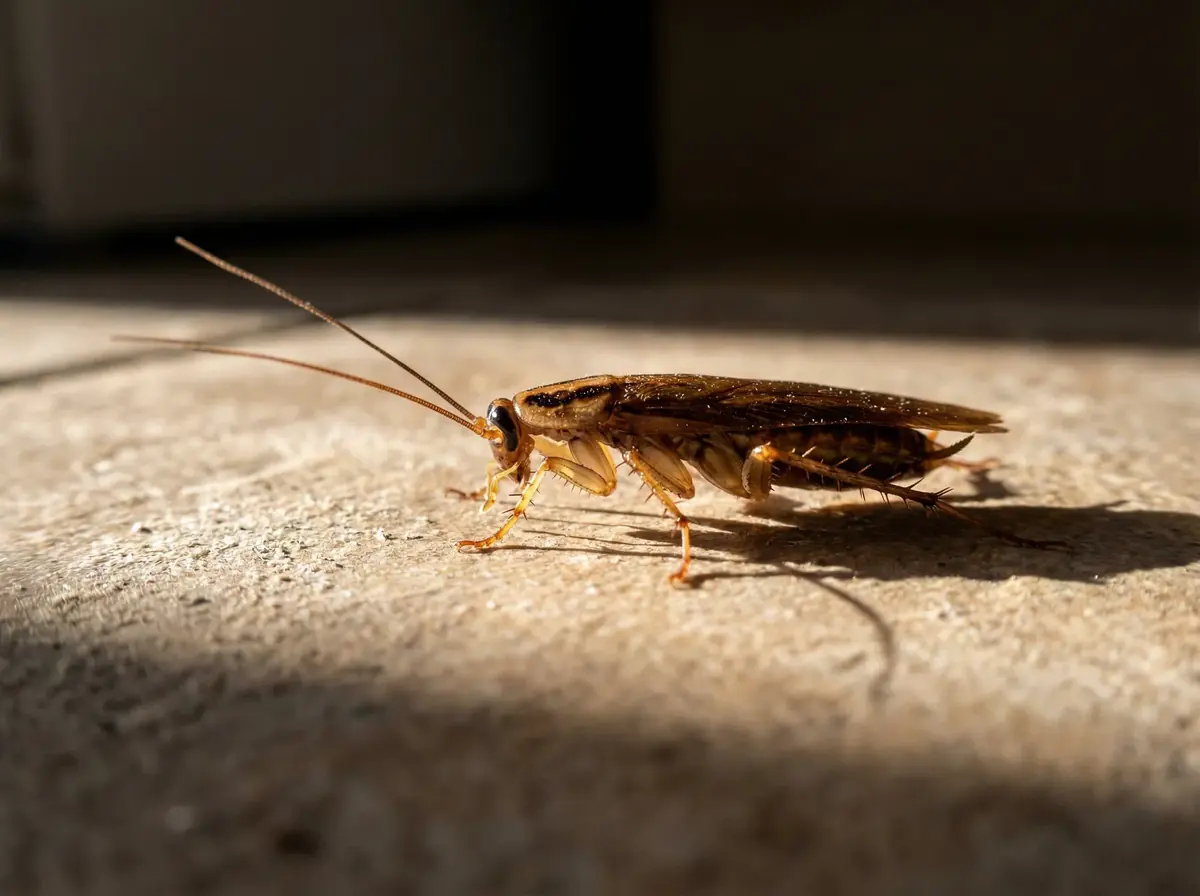
Ants or cockroaches? Start with the pattern
Small insects moving in a clear line towards food, a window, a door threshold or a crack may be ants following a foraging route. That observation alone does not identify the species or show where the nest is, so photographs and the exact location are useful when you make an enquiry.
Cockroaches are more likely to stay concealed around warm, damp or undisturbed areas such as behind appliances, around pipes, sinks, boilers or drains. They are mainly active at night. Droppings, shed skins, egg cases, damaged food packaging or an unusual odour can be more informative than a single sighting.
- Ant-like activity: repeated trails, insects entering through a gap, or activity around a food source.
- Possible cockroach activity: fast, flat-bodied insects with long antennae, usually seen in or near dark harbourages, plus secondary signs.
- Uncertainty: beetles and other insects can be mistaken for cockroaches, while different ants can need different investigation.
Why the treatments are not interchangeable
An ant problem may centre on a nest or a route between the nest and a food or water source. A treatment plan therefore needs to consider the species, where activity is coming from and whether conditions around the building are sustaining it. Simply killing visible workers may not address the source.
Cockroach control is a different task because eggs, nymphs and adults can occupy cracks, voids and inaccessible harbourages. A professional assessment should map those areas and decide whether bait, dust or another permitted treatment is appropriate. Monitoring can help show activity, but sticky traps are not a complete control method.
What to do before an inspection
Keep a note of when and where insects appear, whether activity is in one room or several, and whether you have seen trails, droppings, skins or egg cases. If safe to do so, keep a clear photograph or a specimen in a sealed container rather than relying on a guess based on colour alone.
Reduce access to food and water without moving evidence or applying unlabelled chemicals. Clean food residue, empty rubbish appropriately, address obvious leaks and make the relevant cupboards, appliance edges and service-entry points accessible. Do not assume that a household spray has dealt with a hidden infestation.
What a professional plan should cover
An inspection should confirm or qualify the identification, check harbourages and entry routes, and consider the building’s use. The recommended control may combine hygiene and housekeeping changes, proofing or repairs, monitoring and an insecticide selected for the identified pest and location. Follow-up visits may be needed, particularly where a life cycle or inaccessible void is involved.
For a food business, pest evidence also belongs within the premises’ food-safety procedures. The Food Standards Agency says food premises must support protection against contamination and pest control. Wigan Council separately describes assessment-led pest services for businesses, commercial properties and schools; arrangements and treatment scope should be confirmed for the individual premises.
Questions about insect pest identification
What people ask before booking
Can you identify an insect from a photograph?
A clear photograph can help narrow the possibilities, especially when it shows the insect beside a familiar object and includes the room and location. Identification may still need an inspection because ants, beetles and cockroaches can be confused and the treatment depends on more than appearance.
Are ants always easier to treat than cockroaches?
Not necessarily. The work depends on the species, access to the nest or harbourage, building conditions and how widely activity has spread. Cockroach control often needs particular attention to hidden life stages and follow-up, while ant control may fail if the source and route are not properly understood.
What should a food business do after seeing a cockroach?
Protect food from contamination, record the finding, follow your food-safety procedures and arrange a prompt professional assessment. Do not rely on a visible insect being the only one present. Your pest-control and preparation arrangements should suit the premises and be coordinated with the responsible food-safety manager.
Related help for your property
Further reading: identification, safety and local guidance
- BPCA: Pest Advice for controlling Cockroaches (opens in a new tab)
- Food Standards Agency: Starting a food business (opens in a new tab)
- Wigan Council: Pests and pest control for businesses (opens in a new tab)
Pest images are illustrative, not photographs of a customer's property.